
What does 4D planning actually deliver on a complex urban project?
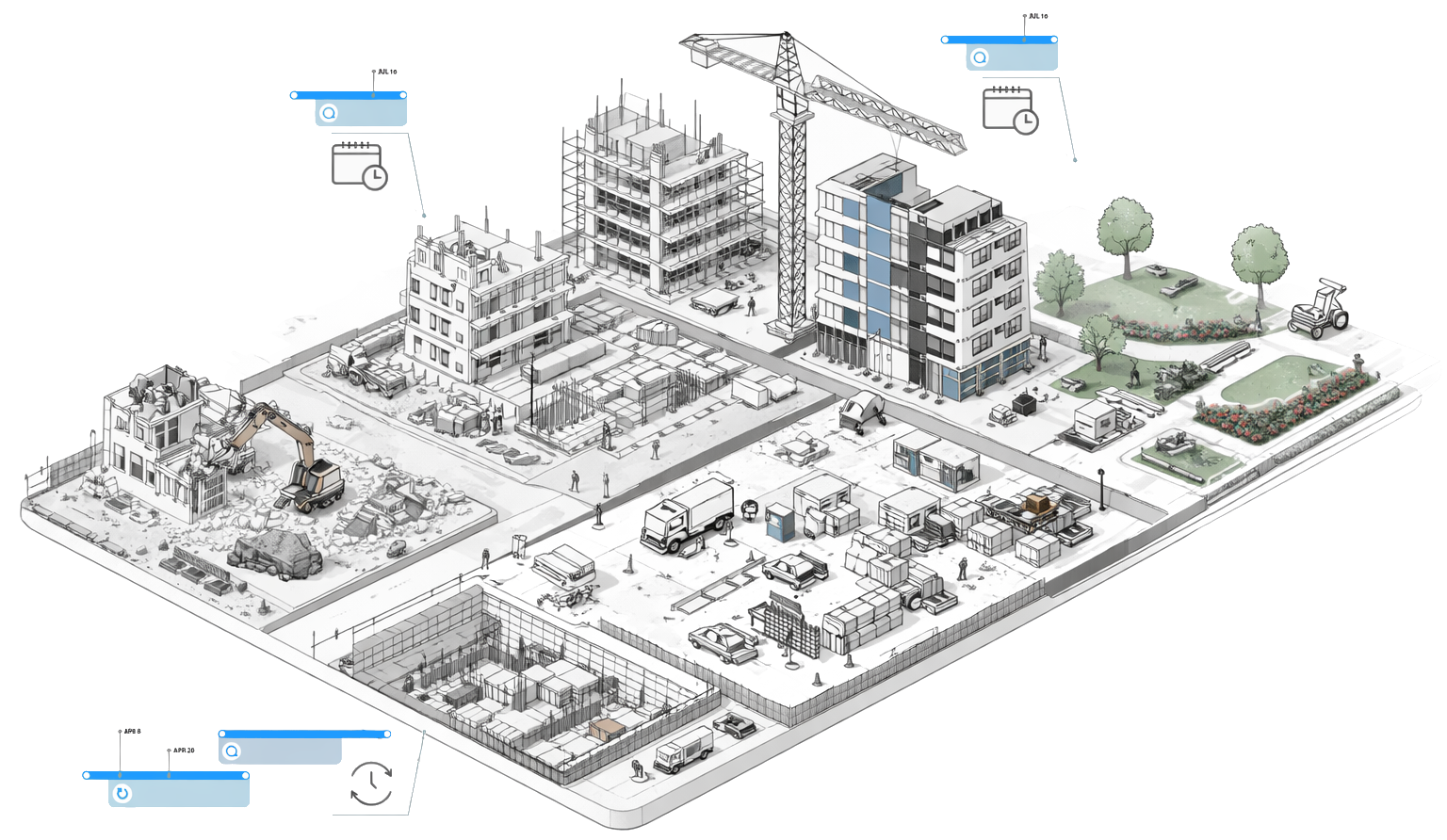
Urban construction is hard. Constrained sites, live neighbours, phased handovers, utilities everywhere, and stakeholders who all have an opinion. It is exactly the kind of environment where 4D planning earns its place.
On a complex urban project, 4D does several things at once. It makes the logistics legible, so everyone understands how materials move, where the cranes sit, and how access changes phase by phase. It surfaces clash and interface risks before they become live problems. And it gives the client and wider stakeholders something tangible to engage with, rather than asking them to interpret a programme document.
Our logistics planning work is built around exactly this. We model and validate access and delivery strategies, run swept path analysis, and make sure the site sequence is digitally rehearsed at every stage, not just at the start when everything still looks straightforward.
On projects where the client wants deeper involvement, our 4D Planning and Digital Project Management service brings all of this together into a single environment, integrating programme, design, and delivery and keeping the whole team aligned as things evolve. Progress tracking, short-term lookaheads, interface resolution workshops, the lot.
4D does not solve the complexity of an urban project on its own. But it gives your team the shared understanding to work through it together. That is really what it is for. If that sounds like something your next project needs, we would love to hear from you.